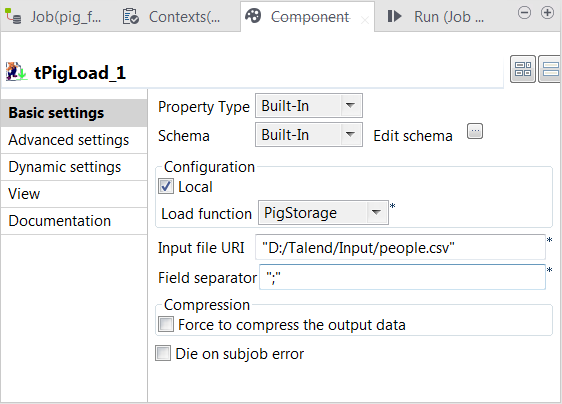
Double-click tPigLoad to open its
Basic settings view.
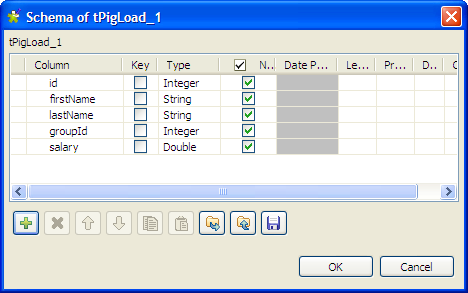
Click the [...] button next to Edit schema to open the Schema dialog box.
Click the [+] button to add columns, name
them and define the column types according to the structure of the input
file. In this example, the input schema has five columns: id (integer), firstName (string), lastName (string), groupId (integer), and salary (double).
Then click OK to validate the setting and
close the dialog box.
Click Local in the Mode area.
Select PigStorage from the Load function list.
Fill in the Input file URI field with the
full path to the input file, and leave the rest of the setting as they
are.
Did this page help you?
If you find any issues with this page or its content – a typo, a missing step, or a technical error – please let us know!