New features
Last updated: 9/24/2026Big Data
| Feature | Description |
|---|---|
| Support for CDP Public Cloud 7.3 with Spark Universal 3.x (Livy Knox) | You can now run your Spark Jobs on a CDP Public Cloud 7.3 cluster using
Spark Universal with Spark 3.x in Livy Knox mode. You can
configure it either in the Spark Configuration view of your
Spark Jobs or in the Hadoop Cluster Connection metadata wizard.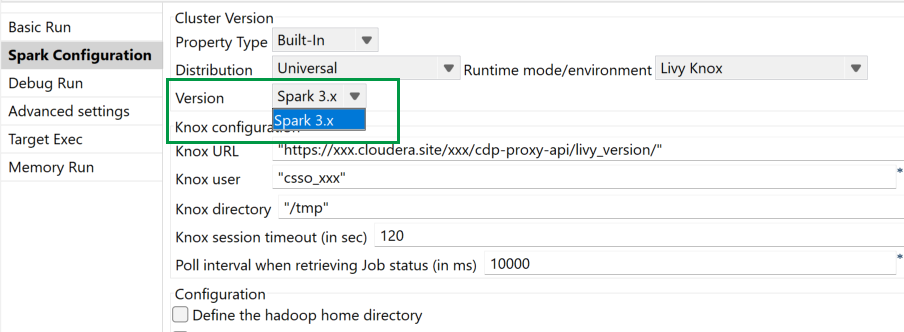
|
| Support for Databricks Unity Catalog in tIcebergTable | You can now use Unity Catalog to work with managed tables in tIcebergTable
component.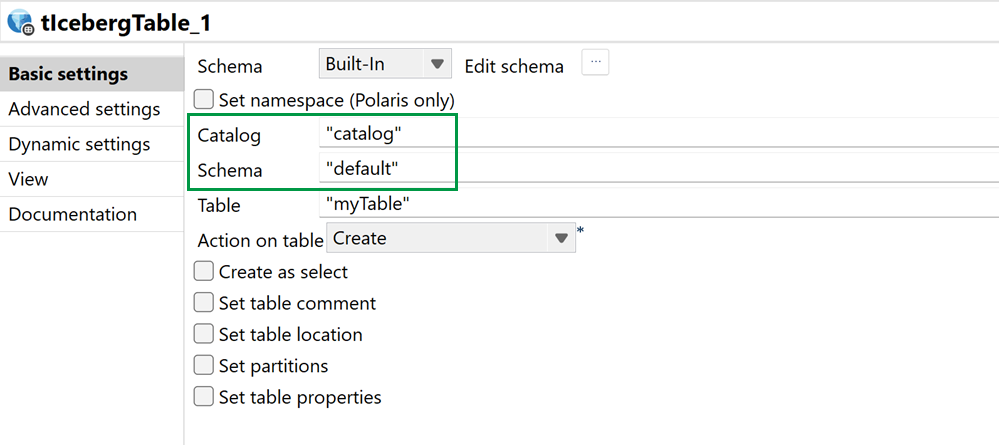
|
| Support for Kudu version 1.17 in the Kudu components | You can now work with Kudu version 1.17 in tKuduConfiguration, tKuduInput,
and tKuduOutput components.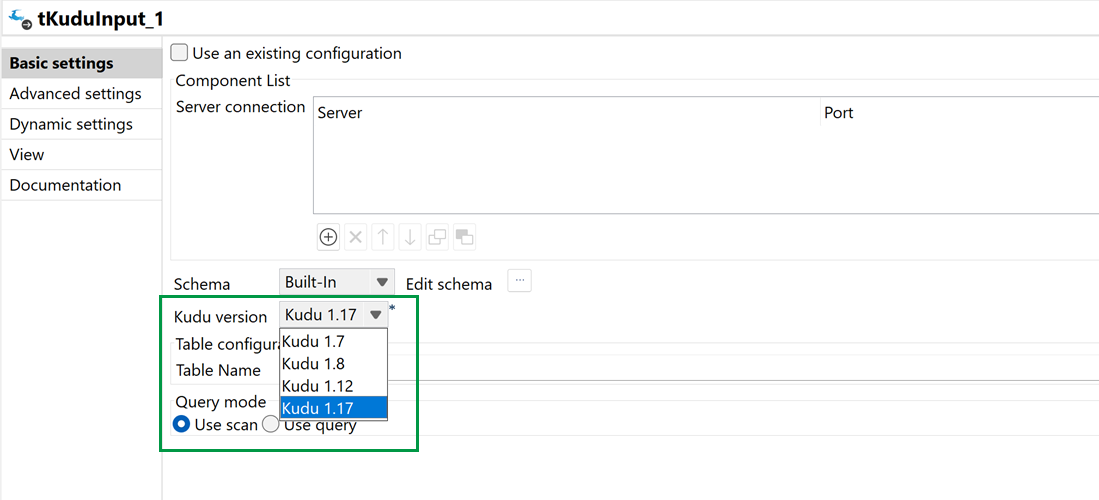
|
Continuous Integration
| Feature | Description |
|---|---|
|
Upgrade of Talend CI Builder to version 8.0.26 |
Talend CI Builder is upgraded from version 8.0.25 to version 8.0.26. Use Talend CI Builder 8.0.26 in your CI commands or pipeline scripts from this monthly version onwards until a new version of Talend CI Builder is released. |
Data Integration
| Feature | Description |
|---|---|
| New tGeminiClient component for Google AI Gemini in Standard Jobs |
The new tGeminiClient component allows integration with Google Gemini AI models, enabling connectivity and interaction with Google’s AI services for enhanced data processing. |
| Support for Confluent for Kafka components in Standard Jobs |
The Kafka components now support Confluent, allowing you to leverage Confluent-specific features in addition to standard Apache Kafka support. Note that testing has been performed only with Confluent Platform, not with Confluent Cloud. For more information about the supported Confluent versions, see Confluent Platform and Apache Kafka compatibility. |
| Support for HTTP/2 protocol for tHTTPClient component in Standard Jobs |
The tHTTPClient component has been updated to support the HTTP/2 protocol, so that improved performance and modern API compatibility are achieved. |
| Support for WSDL logging for SOAP envelopes for NetSuite components in Standard Jobs |
You can now enable WSDL logging for SOAP envelopes in the advanced settings of the NetSuite components, in order to facilitate traceability and troubleshooting. |
Data Mapper
| Feature | Description |
|---|---|
| Support for hierarchical recursive to flat transformation in DSQL map editor | You can now flatten recursive structure in the DSQL map editor. This
recursive to flat transformation introduce the following new clauses:
|
| Support for the CondValidateReport function in any part of a validate expression | You can now use the CondValidateReport function either as the root or as a parameter of a validation expression to provide richer reporting of a validation problem. |
| Support for ReadMapInput function in the non-Eclipse runtime | The ReadMapInput function for Standard map is now supported in the non-Eclipse runtime. |
Data Quality
| Feature | Description |
|---|---|
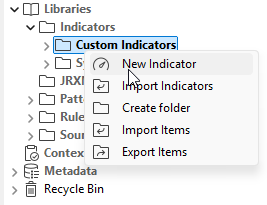
| Renaming user-defined indicators to custom indicators | The user-defined indicators (UDI) have been
renamed to custom indicators on the UI. The feature
is the same, only the name changed.
|