
Resiliency & High Availability
Last updated: 10/5/2026Goal
The goal of this page is to gain an understanding of the various resiliency and high availability options available to a Qlik site.
When speaking about resiliency and high availability within the context of Qlik architecture, there are three tiers to focus on:
- User Resiliency
- Requires 2+ Qlik proxy/engine nodes
- Requires third-party network load balancer
- Reload Resiliency
- Requires 2+ Qlik scheduler nodes
- Site-wide High Availability
- Requires both 1 and 2 from above
- Requires decoupled repository database and decoupled file share
- The repository database can be stream replicated or clustered for resiliency
- The file share must be resilient
- Requires 2+ Qlik nodes with all services enabled, with 1+ nominated as failover candidates
A User Resilient site minimally would look like this:
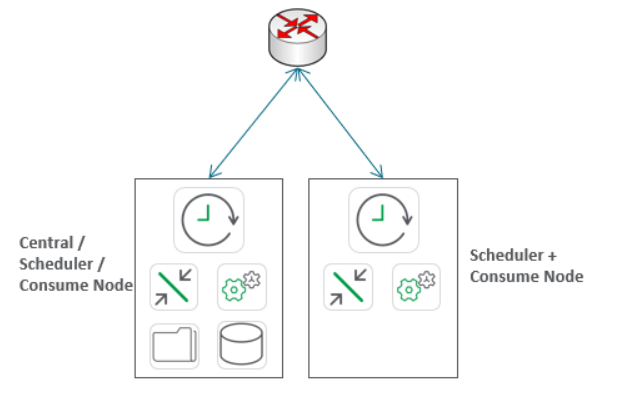
A Reload Resilient site minimally would look like this:
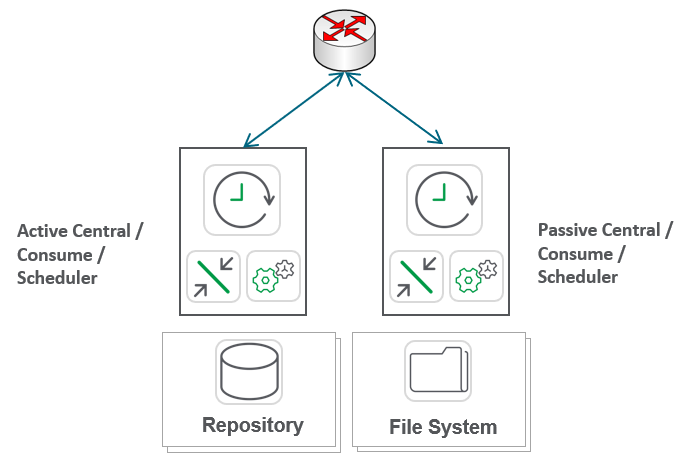
Site-wide High Availability would minimally look like this:
But for the vast majority of Enterprise deployments, Site-wide High Availability would minimally look like this:
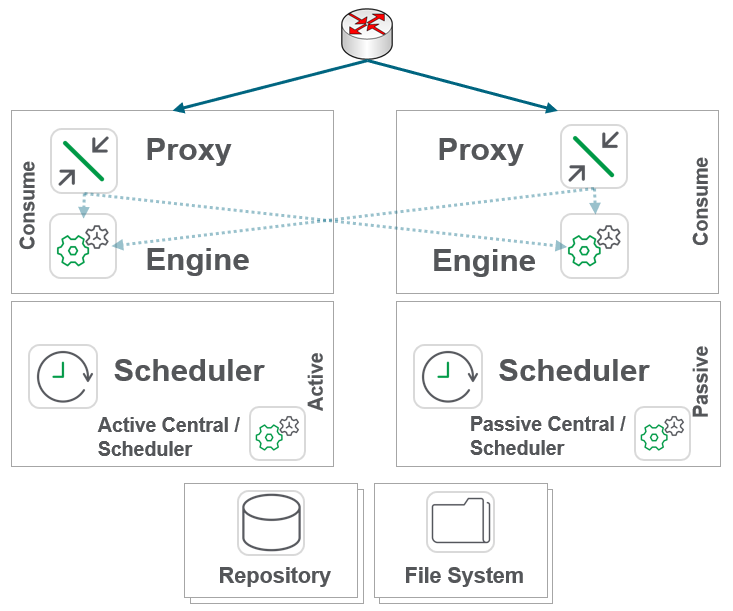
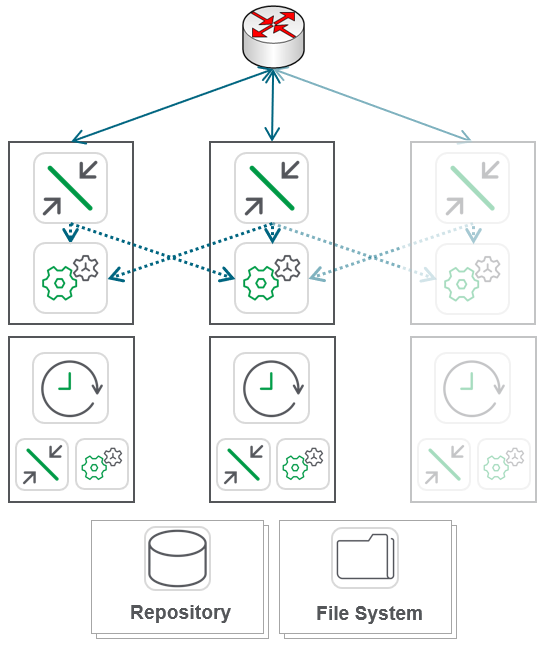
As organizations need to scale out further, they can opt to horizontally scale either the compute dedicated to the front and/or back end nodes as the needs of the organization dictate:
Tags
#architecture
#resiliency
#ha
#HA